¶ Zero trust access
This document is subject of change.
If you using Azure AD for authentication, I disabled Email authentication so you will need either tenant Account or Microsoft Accout to login.
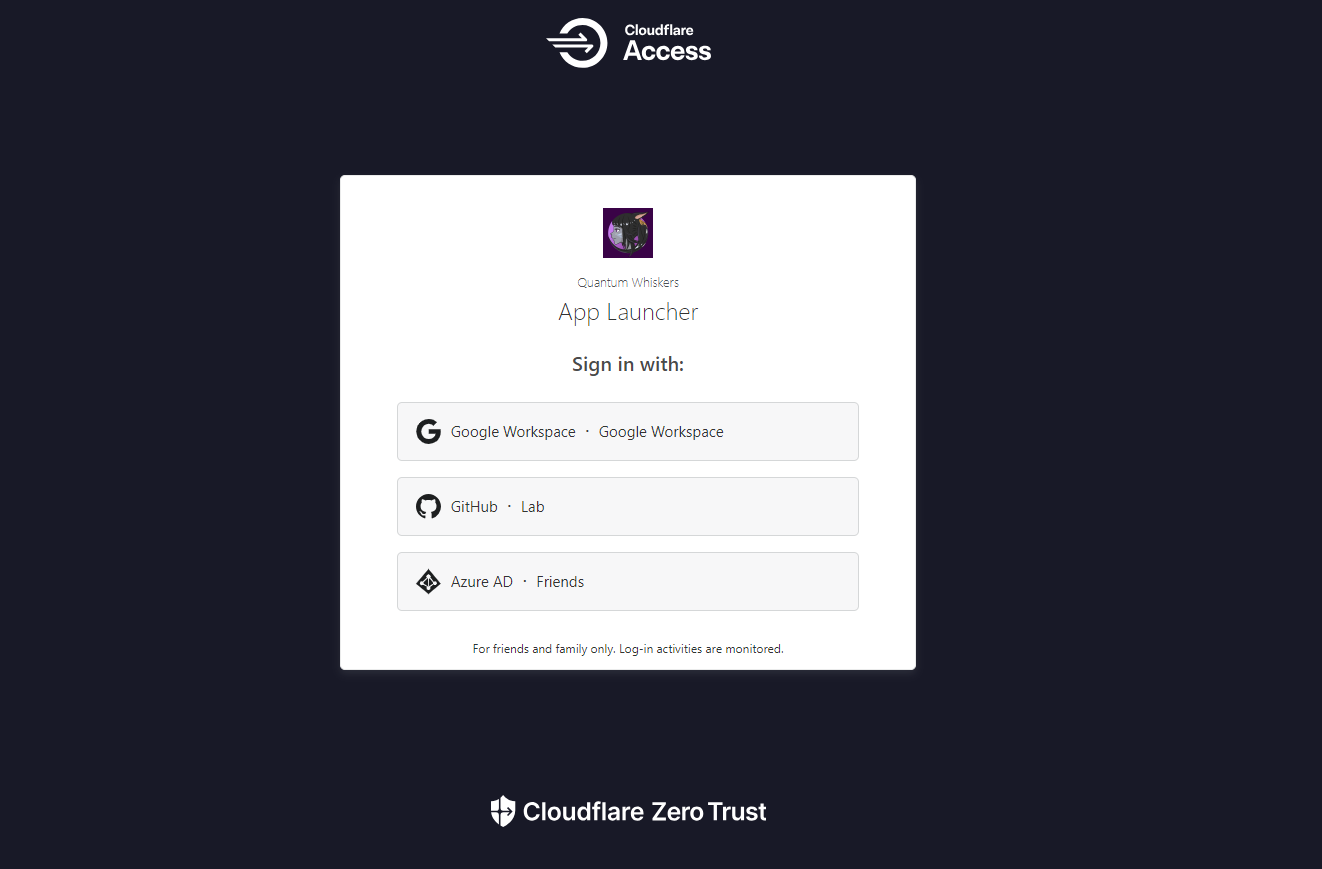
Zero Trust is a cybersecurity framework based on the principle “Never trust, always verify.” It assumes that threats can exist both inside and outside an organization's network, so access should not be automatically granted based on location or credentials alone. Instead, every request must be continuously authenticated, authorized, and monitored.
¶ Key Principles of Zero Trust:
-
Verify Explicitly – Always authenticate and authorize users, devices, and applications based on multiple factors (e.g., MFA, device compliance, geolocation).
-
Least Privilege Access – Users and devices should have only the minimum permissions required to perform their tasks, reducing potential attack surfaces.
-
Micro-Segmentation – Networks are divided into smaller, isolated zones to limit lateral movement in case of a breach.
-
Assume Breach – Always operate under the assumption that a breach has already happened and design security measures accordingly.
-
Continuous Monitoring and Analytics – All access requests and behaviors are logged and analyzed for anomalies or potential threats.
-
Device and Endpoint Security – Every device accessing the network is verified and checked for compliance with security policies.
¶ Why Zero Trust Matters
Traditional security models assume trust within a network perimeter (e.g., firewalls and VPNs). However, with remote work, cloud adoption, and sophisticated cyber threats, attackers can easily bypass perimeter defenses. Zero Trust mitigates this by enforcing strict access controls at every level.
¶ Implementation of Zero Trust
- Identity and Access Management (IAM) with Multi-Factor Authentication (MFA)
- Role-Based Access Control (RBAC) and Just-In-Time Access (JIT)
- Endpoint Detection and Response (EDR)
- Network Access Control (NAC) and Software-Defined Perimeters (SDP)
- Cloud Security Posture Management (CSPM)